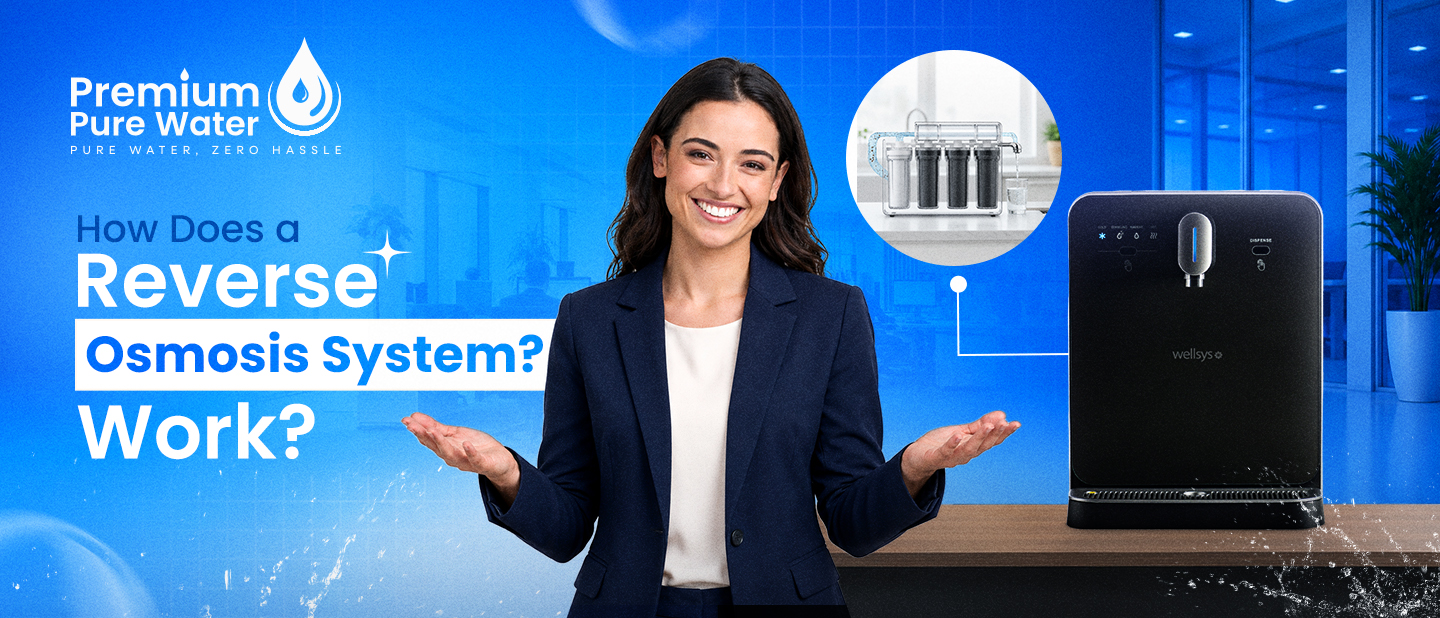
A reverse osmosis (RO) system purifies water by using pressure to force water molecules through a tiny, semi-permeable membrane. The process leaves behind dissolved salts, minerals, and other impurities on one side, and clean water passes to the other.
Providing clean and safe water for your workplace solves vital hydration challenges. Therefore, if you are planning for facility upgrades, understanding how the system works in detail is essential.
In this guide, we will clearly explain how a reverse osmosis system works, what it removes, and what happens to rejected water. You will also learn about key components, maintenance, benefits, and system selection. The practical overview ahead is going to help you make informed commercial water filtration decisions.
What Is Reverse Osmosis?
Reverse osmosis (RO) is a water purification process that uses pressure to move water through a thin-special filter – a semi-permeable membrane.
The filter blocks and removes up to 99% of dissolved salts, chemicals, and germs while treated water passes through and flows into a storage tank for later use.
A reverse osmosis water purification system typically combines this membrane with pre-filters and post-filters for consistent treatment. In commercial applications, understanding each filtration stage helps you assess performance, maintenance needs, and suitability. You need a clear basis for evaluating water quality, system capacity, and treatment goals before selecting equipment.
How Does a Reverse Osmosis System Work?
RO technology purifies water through several controlled filtration stages. Each of these stages targets specific impurities before water reaches the final dispensing point.
Take a look at how a reverse osmosis system works through this multi-stage process:
Stage 1: Sediment Pre-Filtration
The first stage removes larger sediment particles before water reaches the delicate RO membrane. A sediment filter captures physical impurities that could reduce filtration efficiency.
This initial barrier protects later components and supports consistent system performance during regular operation.
- Captures sand, dirt, and visible particles.
- Reduces rust and suspended matter.
- Protects downstream filtration components from clogging.
- Improves overall filtration system efficiency.
- Prepares water for finer filtration stages.
Stage 2: Carbon Filtration
Carbon filtration treats water before it reaches the RO membrane. Activated carbon reduces chlorine, odors, and certain organic compounds that can affect membrane performance.
The present stage also improves taste and protects membrane materials from chlorine-related degradation during continued operation.
- Reduces chlorine from incoming water.
- Helps control unpleasant tastes and odors.
- Reduces certain organic chemical compounds.
- Protects membranes from chlorine damage.
- Improves water quality before membrane filtration.
Stage 3: Reverse Osmosis Membrane
The RO membrane performs the system’s primary purification function. Pressure pushes water through a semi-permeable membrane, leaving behind a number of dissolved contaminants.
Treated water continues forward, and concentrated reject water exits through a separate pathway for appropriate handling.
- Uses pressure to drive membrane filtration.
- Separates water from many dissolved contaminants.
- Reduces dissolved salts and mineral content.
- Produces purified water for further treatment.
- Directs concentrated contaminants toward reject drainage.
Stage 4: Post-Filtration
A post-filter provides final polishing by improving taste and odor significantly. After membrane filtration, water may pass through this additional treatment before reaching its dispensing point.
This stage helps deliver the commercial hydration system cleaner-tasting water. At the same time, it also maintains consistent quality throughout regular commercial use.
- Polishes water after membrane treatment.
- Improves final taste and overall odor.
- Reduces remaining trace organic compounds.
- Provides an additional quality-control barrier.
- Prepares treated water for convenient dispensing.
Stage 5: Storage and Dispensing
Depending on system design, purified water enters a storage reservoir before dispensing. The final stage makes treated water available when users need it.
Commercial systems often combine treatment and dispensing technologies to provide consistent access across high-use environments.
- Stores purified water between dispensing cycles.
- Maintains convenient water availability during demand.
- Supports consistent dispensing during busy periods.
- Connects filtration with workplace hydration.
- Delivers treated water at dispensing points.
What Does a Reverse Osmosis Water Filtration System Remove?
A reverse osmosis system removes dissolved solids, heavy metals, and harmful chemicals from tap water. It’s a membrane technology that consistently eliminates dangerous microscopic contaminants.
This advanced purification guarantees safe, fresh, and superior hydration for demanding corporate environments and heavy industrial applications. Below are the elements that an advanced RO system removes:
- Advanced membranes extract toxic heavy metals like lead.
- Carbon filters remove harsh chlorine to improve taste.
- The system effectively extracts dissolved salts from tap water, such as sodium, chloride, and sulfate.
- The process eliminates dangerous forever chemicals from water, including polyfluoroalkyl substances (PFAS).
- Microscopic pores physically block harmful bacteria and viruses.
- Filtration removes calcium deposits to protect ice machines.
What Happens to the Wastewater in Reverse Osmosis?
Reverse osmosis produces wastewater called “concentrate,” “reject water,” or “brine.” It’s because the membrane separates purified water from many dissolved contaminants. The stream contains higher concentrations of rejected substances.
It requires appropriate disposal based on system design and local requirements for safe and compliant operation. Below is exactly what happens to the wastewater in the RO system:
1. Reject stream
The system sends concentrated contaminants and excess water into a separate reject stream during membrane filtration. The concentrate typically requires drainage or approved disposal methods.
2. Water recovery
Water recovery measures how much incoming water becomes treated water rather than reject water. Efficient RO systems can improve recovery rates and maintain effective contaminant separation and membrane performance.
3. Concentrate composition
The concentrate may contain higher levels of dissolved substances than purified water that’s leaving the membrane system. Its composition entirely depends on incoming water quality and membrane operating conditions.
4. System efficiency
Commercial RO-enabled hydration optimizes system efficiency and maintains effective contaminant separation and membrane performance simultaneously. With proper settings, you can balance water efficiency, treatment quality, and equipment protection over time.
5. Proper disposal
Businesses should follow plumbing and discharge requirements when disposing of wastewater from RO systems safely. With professional installation, you can route concentrate safely and support reliable system operation.
What Are the Main Components of an RO System?
An RO water purification system combines various components that work together to pre-treat, purify, polish, store, and dispense water. Each component performs a specific function during filtration and supports consistent treatment.
Take a look at the components below before evaluating system capability, maintenance, and quality.
Sediment filter: The sediment filter captures sand, dirt, rust, and particles before water reaches filters. This first line of filtration protects downstream filters and supports efficient overall system operation.
Carbon filter: The carbon filter reduces chlorine, odors, and certain organic compounds before membrane treatment. It also protects membrane materials from chlorine damage during daily operation.
RO membrane: The RO membrane is basically semi-permeable, which separates treated water from many dissolved contaminants under pressure. It provides the system’s purification barrier throughout the treatment process continuously.
Pressure pump: The pressure pump creates force to move water through the membrane and maintain performance. Proper pressure supports reliable separation and consistent treatment performance during operation.
Storage tank: A storage tank holds water after filtration and makes the water available during high demand. The tank supports convenient access between treatment and dispensing cycles during busy periods.
Post-filter: The post-filter provides final polishing by reducing tastes and odors before dispensing. It’s the final stage, which helps improve the sensory quality of treated water significantly.
Benefits of a Reverse Osmosis System
The primary benefit of a reverse osmosis filtration system is to provide safer, great-tasting drinking water. Moreover, it also improves food and beverage flavors and cuts down on plastic bottle waste without needing electricity. Your facility will immediately notice significant financial savings over standard deliveries.
Below, we have elaborated a range of benefits:
1. Removes Contaminants
Advanced reverse osmosis technology completely filters out dangerous heavy metals, toxic arsenic, and hidden harmful industrial chemicals. The rigorous purification process guarantees your daily drinking water remains perfectly safe from dangerous microscopic municipal pipe impurities.
2. Improves Taste
Removing harsh chlorine, dissolved salts, and foul odors drastically improves the overall flavor profile of municipal tap water. The beverages at your workplace, like premium coffee or steeped tea, taste fresher upon brewing with fully purified water.
3. Saves Money
When you produce purified water directly onsite, it successfully eliminates the frustrating need to purchase expensive commercial water bottles. Today’s modern RO-enabled sparkling water setups quickly pay for themselves over time through lower corporate or household hydration costs.
4. Eco-Friendly
Utilizing a modern filtration setup massively reduces the staggering amount of plastic waste, making it an eco-friendly hydration approach. Actively cutting down on basic disposable plastics directly helps protect our vulnerable natural environment from global pollution.
5. Easy Maintenance
Compact commercial units fit seamlessly into office breakrooms and require simple annual filter swaps to maintain performance. Professional service technicians handle all regular cartridge replacements to keep the advanced hydration system running smoothly for years.
How Often Should an RO System Be Maintained?
An RO system requires regular maintenance with each component following a different replacement schedule. The actual maintenance intervals can vary according to water quality, usage, and system performance:
1. Filter Replacement Schedule
- Sediment pre-filter: Replace the sediment filter every 6 to 12 months to capture dirt, rust, and suspended particles.
- Carbon filters: Replace carbon filters every 6 to 12 months to reduce chlorine and protect the RO membrane.
- Post-filter: Replace the post-filter every 12 months to maintain clean, fresh-tasting water after filtration.
2. Core Component Care
- RO membrane: Replace the RO membrane every 2 to 3 years, or sooner when flow decreases or TDS levels increase.
- System sanitization: Sanitize and flush the storage tank and internal tubing annually using an appropriate sanitizing solution.
- UV lamp (if fitted): Replace the UV lamp every 12 months to maintain effective microbial control throughout the treatment process.
Reverse Osmosis vs. Other Water Filtration Systems
When comparing reverse osmosis vs. carbon filtration and other systems, RO consistently delivers the most comprehensive purification available. It’s proven that standard filters routinely miss dissolved solids and heavy metals.
The detailed chart below explains exactly how reverse osmosis outperforms basic carbon blocks and ultraviolet alternatives:
| Filtration System | Primary Mechanism | Contaminants Removed | What It Misses? | Best Commercial Application |
| Reverse Osmosis (RO) | High pressure forces water through a microscopic semi-permeable membrane. | Heavy metals, dissolved salts, forever chemicals, chlorine, and bacteria. | Nothing (it purifies so thoroughly it removes beneficial minerals). | Total purification for premium office drinking water and clear ice machines. |
| Carbon Filtration | Porous activated carbon material physically absorbs passing chemicals and gases. | Harsh chlorine, bad tastes, foul odors, and large sediment. | Dissolved salts, heavy metals, and dangerous microscopic pathogens. | Basic breakroom coolers located in areas with highly safe municipal tap water. |
| UV Purification | Intense ultraviolet light rays scramble the DNA of living organisms. | Harmful bacteria, dangerous viruses, and living microscopic pathogens. | Heavy metals, harsh chemicals, dissolved salts, and physical dirt. | High-traffic healthcare facilities or public areas requiring strict biological sterilization. |
| Ultrafiltration (UF) | Water passes through a specialized hollow fiber physical membrane barrier. | Large sediment particles, rust, bacteria, and some larger viruses. | Dissolved minerals, heavy metals, and smaller toxic chemical compounds. | General office hydration requiring reliable physical filtration without chemical removal. |
How to Choose the Right Reverse Osmosis System?
To choose the right commercial RO system, consider water quality, usage, capacity, maintenance needs, and available installation space. Follow the steps below to find the right one for your workplace needs:
1. Assess Water Quality
Review incoming water quality and identify contaminants requiring treatment for your facility. An assessment like this shows whether RO filtration suits those specific incoming water conditions effectively.
2. Determine Capacity
Carefully estimate daily demand, peak usage, and dispensing requirements across your facility. Higher usage may require greater capacity, faster recovery, or additional daily dispensing points.
3. Compare System Features
You need to compare filtration stages, dimensions, and installation requirements before selecting suitable equipment. Commercial options such as the WL50CT water dispenser suit different workplace configurations effectively.
4. Consider Ongoing Support
Finally, evaluate maintenance, service support, warranty coverage, and long-term operating requirements before deciding. Reliable servicing helps preserve filtration performance and equipment efficiency throughout daily operation.
Experience The RO Difference At Premium Pure Water
Reverse osmosis water purification provides businesses with an effective approach to improve water quality and support reliable workplace hydration. Understanding filtration stages, maintenance requirements, and system capacity helps facilities choose suitable equipment confidently.
Premium Pure Water provides RO-enabled commercial water purification solutions. We have designed our systems around different operational requirements, usage levels, and workplace environments. From filtration technology through ongoing service, the right system can simplify hydration while supporting consistent water quality.
Explore Premium Pure Water’s commercial hydration solutions today and find the right fit for your facility.
Frequently Asked Questions
1. What Is Reverse Osmosis In Water Treatment?
Reverse osmosis is a water treatment process that uses pressure to move water through a semi-permeable membrane. The membrane separates pure water molecules from dissolved salts, chemicals, and microbes.
2. How Long Does A Reverse Osmosis System Take To Filter Water?
A typical RO system takes about 2 to 4 hours to fill a 2-to-4-gallon storage tank. Standard systems generally produce around 50 to 75 gallons daily, depending on operating conditions and water quality.
3. Which RO Is Best For Commercial Use?
No single RO system suits every commercial facility. It’s because every requirement differs by water quality, usage, capacity, and space. Choose equipment based on filtration performance, output, maintenance, and specific installation requirements.
4. What Happens If We Drink RO Water Every Day?
Drinking RO water every day can provide purified hydration when the system operates correctly and receives proper maintenance. The quality of the water depends on source conditions, filtration performance, and appropriate mineral considerations.
5. What Is The Disadvantage Of Reverse Osmosis?
Reverse osmosis can waste some incoming water because the process sends concentrated contaminants away from the membrane. These systems also require regular maintenance, replacement components, and proper reject water disposal methods.
6. How Does RO Filtration Work In Simple Terms?
Reverse osmosis uses pressure to push water through a special membrane that blocks many dissolved contaminants. The system separates treated water from concentrated impurities before delivering purified water for use.