
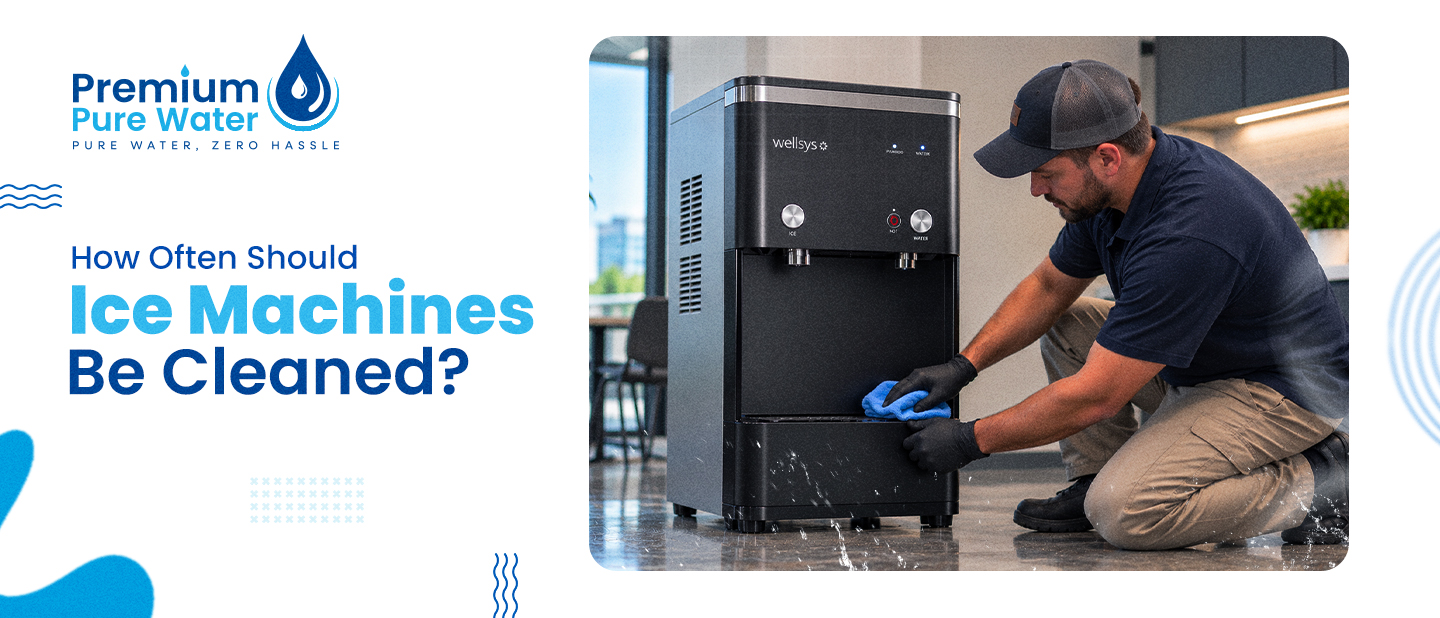
Most commercial ice machines should be cleaned and sanitized according to the manufacturer’s recommended schedule. A six-month interval is a common guideline, but the right schedule depends on water quality, usage frequency, machine type, and operating conditions. Also, follow the maintenance instructions for your specific model.
An ice machine can look clean on the outside while mineral scale, slime, and residue build up inside the water and ice-making system. For restaurants, hotels, offices, healthcare facilities, and other commercial spaces, regular cleaning helps maintain ice quality and equipment performance.
So, the answer to how often ice and water dispenser machines should be cleaned depends on several factors.
This guide covers ice machine cleaning to help you learn the factors and know how to maintain a commercial ice machine.
How Often Should Ice Machines Be Cleaned?
For many commercial ice machines, a six-month cleaning and sanitizing schedule is a useful starting point. However, always follow the manufacturer’s instructions.
Your facility may need a different schedule depending on how the machine operates and the quality of its incoming water.
| Operating Condition | Potential Maintenance Need |
| Normal water quality and moderate use | Follow the manufacturer’s standard schedule |
| Hard water | More frequent descaling may be needed |
| Heavy daily ice production | More frequent inspection and cleaning |
| Bakery or yeast-heavy environment | More frequent sanitizing may be necessary |
| Visible scale or slime | Clean or service the machine sooner |
| Unusual taste or odor | Inspect and clean the ice-making system |
| Reduced ice production | Check for scale, airflow, water flow, or other service issues |
Expert makers recommend cleaning and sanitizing machines every six months. They recommend testing water quality and considering appropriate water treatment when a machine requires more frequent cleaning.
The takeaway is simple: Use the manufacturer’s schedule as your baseline, then adjust maintenance as operating conditions require.
What Factors Affect Commercial Ice Machine Cleaning Frequency?
A fixed calendar schedule does not tell the whole story. Several factors can determine how quickly an ice machine develops scale, residue, or other buildup.
Water Quality
Water hardness is a major consideration. Hard water contains minerals that can accumulate on components and create scale over time.
If scale builds up quickly, the machine may need more frequent descaling. Also, water-quality testing is necessary when the machines need cleaning more often than the standard schedule.
Ice Production and Usage
A machine producing hundreds of pounds of ice each day experiences more water flow and operating cycles than one serving a small office.
High-volume environments may need more frequent inspections, especially when ice production runs continuously.
Operating Environment
The area around the machine also matters.
Restaurants, bakeries, bars, and commercial kitchens may expose equipment to:
- Grease and cooking vapors
- Flour and airborne particles
- Heat and humidity
- Yeast
- Dust
- Frequent handling
Ice machine manufacturers state that environments with high concentrations of airborne yeast, such as bakeries, may require more frequent sanitizing.
Machine Type and Manufacturer
Cleaning requirements can vary by machine design and manufacturer. Always check the model’s manual for approved cleaning products, procedures, and maintenance intervals.
Using the wrong cleaner or applying a product too frequently can damage equipment. Manufacturer instructions should guide the process.
What Are the Signs Your Ice Machine Needs Cleaning?
You don’t have to wait for the next scheduled maintenance date if the machine shows signs of buildup or poor performance.
Watch for:
- Cloudy or unusual-looking ice
- Unpleasant taste or odor
- Visible slime or residue
- Mineral scale around water-contact components
- Smaller or incomplete ice cubes
- Slower ice production
- Longer harvest cycles
- Reduced ice output
- Water flow problems
- Recurring maintenance issues
These signs can have several causes, so don’t treat cleaning as the answer to every equipment problem. Reduced production, for example, can also result from airflow, refrigeration, water supply, or mechanical issues.
A good maintenance program combines regular cleaning with routine inspection.
Why Is Regular Ice Machine Cleaning Important?
The equipment that makes and stores ice needs the same attention to cleanliness as other food-service equipment.
Regular maintenance helps address three key areas to maintain the machines’ hygiene. It also helps businesses avoid preventable service issues and interruptions during busy operating hours.
Ice quality
Clean equipment helps maintain the appearance, taste, and odor of the ice it produces. Mineral scale, residue, slime, or microbial growth can affect ice quality over time.
Regular cleaning and sanitizing help keep water-contact and storage areas cleaner, giving employees, customers, and guests a better ice experience.
Equipment performance
Mineral deposits can build up on water-contact components and interfere with the ice-making process. Lime and calcium scale may reduce efficiency and contribute to equipment problems over time.
Following the recommended cleaning schedule helps control buildup and can reduce the risk of avoidable service calls or performance issues.
Operating costs
A neglected machine may require more frequent service and can experience performance problems that disrupt normal operations.
For a busy restaurant or hotel, unexpected downtime can create a much bigger problem than scheduling routine maintenance.
How Do You Clean a Commercial Ice Machine or Ice Dispenser?
The exact process of cleaning an ice machine varies by manufacturer and model, so the owner’s manual should always be the primary reference.
In general, commercial ice machine cleaning involves several stages.
1. Remove and discard existing ice
Before cleaning, remove ice from the machine and storage bin. This prevents cleaning or sanitizing products from coming into contact with ice intended for use.
2. Put the machine into cleaning mode
Follow the manufacturer’s instructions to start the cleaning cycle or shut down the machine.
3. Descale the water-contact components
Use an approved ice machine cleaner or descaler to remove mineral deposits. The correct product, concentration, and contact time depend on the equipment type or model.
4. Clean removable components
Depending on the model, you may need to clean components such as water distribution parts, screens, scoops, and bin surfaces individually.
5. Rinse thoroughly
Carefully follow the manufacturer’s instructions to rinse the water path and remove cleaning solution.
6. Sanitize the machine
Cleaning and sanitizing are separate processes. A cleaner removes mineral deposits and other soils, while sanitizer addresses microbial contamination.
Most manufacturers specifically state that their cleaner and sanitizer perform separate functions and should not be mixed.
7.Restart and discard the required ice
Follow the manufacturer’s startup procedure and discard ice produced during the cleaning process when instructed.
For a heavily scaled or neglected machine, professional service may be more appropriate than a routine cleaning cycle.
How Does Water Filtration Help Keep Ice Machines Clean?
Water quality can directly affect maintenance requirements. This is where ice machine water filtration can become an important part of a commercial setup.
A suitable water filter can help reduce particulates, such as sediment and certain minerals, before water reaches the ice machine. This can help minimize scale and protect the equipment. However, filtration does not eliminate the need for cleaning and sanitizing.
The right filtration approach depends on the incoming water. A facility dealing with hard water may have different requirements from one with relatively soft water.
For businesses considering a combined water and ice solution, Premium Pure Water offers commercial ice and water dispensers with filtration and sanitation features. For example, its i14 Combination Ice & Water Dispenser supports reverse osmosis and includes in-tank UV sanitization, while the i15 Ice and Water Dispenser combines advanced filtration with in-tank UV protection and nugget ice production.
Premium Pure Water‘s commercial ice and water dispenser range includes options for offices, hospitality, healthcare, education, warehouses, and other commercial environments.
Filtration should complement a proper maintenance program. It does not replace scheduled cleaning, descaling, or sanitizing.
When Should You Call a Professional?
Routine maintenance covers many tasks, but some situations require a qualified professional.
Consider professional help when:
- Heavy mineral scale keeps returning.
- Cleaning does not resolve unusual odors or poor ice quality.
- Ice production remains low after routine cleaning.
- Water continues to leak or drain improperly.
- The machine requires cleaning more often than the manufacturer’s normal schedule.
- Internal components are difficult to access.
- You suspect a refrigeration, electrical, or mechanical problem.
- The equipment has been neglected for a long time.
If an ice machine repeatedly develops scale, don’t just increase cleaning chemicals. Test water quality and consider appropriate water treatment when the machines require more frequent cleaning.
A professional can help determine whether the underlying issue is water quality, equipment condition, installation, or another maintenance concern.
Keep Your Ice Machine Ready & Efficient for Daily Use
Knowing how often ice machines should be cleaned is only the starting point. The right maintenance schedule depends on your machine, water quality, usage, and operating environment.
For many commercial machines, six months is the most recommended frequency. But a facility with hard water, heavy ice demand, or challenging environmental conditions may need more frequent attention. Manufacturer instructions should always come first.
Regular cleaning, appropriate water filtration, timely filter replacement, and professional service when needed can help keep an ice machine operating reliably.
For businesses using combined ice and water dispensers, choosing equipment with appropriate filtration and sanitation features can also make day-to-day maintenance easier. Premium Pure Water’s commercial ice and water dispensers offer different configurations for workplaces and other high-use facilities, allowing businesses to consider water quality and ice requirements together.
A consistent maintenance routine can help protect ice quality, support equipment performance, and reduce avoidable interruptions to daily operations.
Frequently Asked Questions
1. What happens if you don’t clean your ice machine?
An uncleaned ice machine can develop mineral scale, slime, odors, and residue. Buildup can reduce ice quality and equipment performance over time. Lack of maintenance also leads to more frequent servicing needs.
2. How often should commercial ice machines be cleaned?
Many commercial machines use a six-month cleaning and sanitizing interval, but the correct schedule depends on the manufacturer’s instructions, water quality, usage, and operating environment. Some manufacturers recommend different intervals.
3. How often do commercial ice machine manufacturers recommend cleaning?
There is no single manufacturer-wide recommendation. Some recommend cleaning and sanitizing their machines every six months, while others recommend at least once a year. Always follow the instructions for your specific model.
4. Does water filtration eliminate the need to clean an ice machine?
No. Filtration can help reduce sediment and mineral buildup, but the machine still needs routine cleaning and sanitizing. It specifically needs to be maintained according to manufacturer recommendations.
5. Is cleaning the same as sanitizing an ice machine?
No. Surface cleaning removes soils and mineral deposits, but it is ultimately a preparatory step in the sanitation process. Sanitization is the removal or reduction of microorganisms on applicable contact surfaces.